Unity animation events are a pretty handy tool for game developers. They let you sync actions—like playing a sound or triggering a script—right in the middle of an animation. If you’ve ever wanted to make your game feel more alive and responsive, animation events are a great place to start. This guide will walk you through what they are, how to set them up, and some tips to make the most out of them.
Key Takeaways
- Unity animation events help you synchronize actions with animations easily.
- They can be used for tasks like triggering sounds, effects, or gameplay events.
- Setting up animation events involves adding them directly to your animation timeline.
- Proper timing is key to making animations feel smooth and natural.
- Debugging tools in Unity can help you troubleshoot animation event issues.
Understanding Unity Animation Events
What Are Animation Events in Unity?
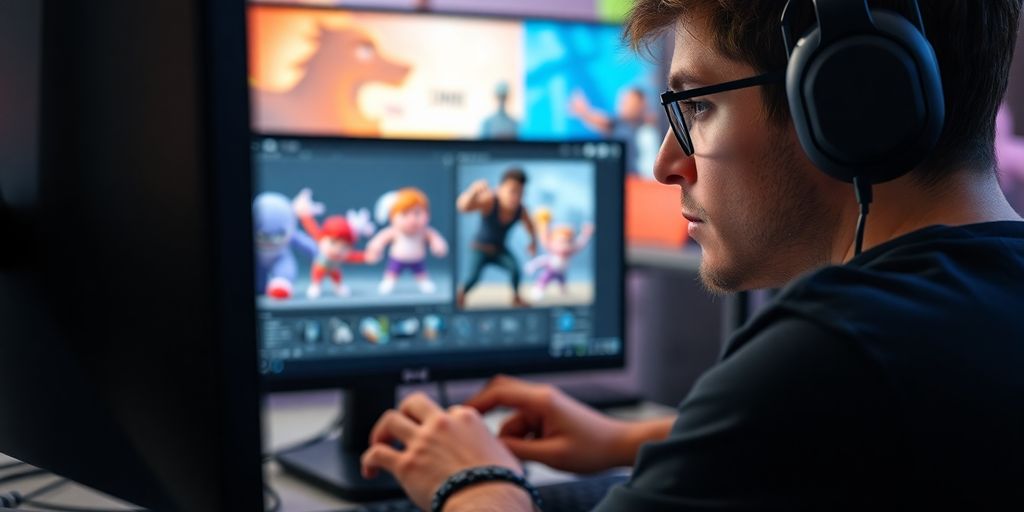
Animation Events in Unity are a way to embed specific actions or triggers directly into an animation timeline. They allow developers to synchronize gameplay mechanics, visual effects, and sounds with precise moments in an animation. This feature is especially useful for creating cohesive and interactive experiences. For example, in a sword-swing animation, you can trigger a sound effect or enable a hitbox at the exact moment the sword connects with an enemy.
Key points about Animation Events:
- They are added to animation clips in the Unity Editor.
- They call specific functions in scripts.
- They can pass parameters to those functions for greater flexibility.
Key Benefits of Using Animation Events
Using Animation Events can streamline your development process and make your animations more impactful. Here are some of the main advantages:
- Precision: You can align gameplay actions with animation frames for better timing.
- Efficiency: Reduce the need for additional scripts or complex logic to handle timing.
- Versatility: Trigger a variety of actions such as sound effects, particle systems, or gameplay events.
| Benefit | Description |
|---|---|
| Precision | Aligns actions with specific animation frames. |
| Efficiency | Simplifies coding by embedding triggers directly in animations. |
| Versatility | Supports a wide range of actions, from sounds to gameplay logic. |
Common Use Cases for Animation Events
Animation Events are incredibly flexible and can be used in various scenarios. Here are some common examples:
- Character Interactions: Triggering attack damage during combat animations.
- Sound Effects: Playing footstep sounds in sync with walking animations.
- Visual Effects: Activating particle effects, like sparks or explosions, during specific animation frames.
- Gameplay Mechanics: Enabling or disabling hitboxes or colliders at specific moments.
“Animation Events are like invisible threads that tie your animations to the rest of your game, making everything feel more connected.”
By understanding and utilizing Animation Events, you can make your game animations not only visually appealing but also functionally integrated into your gameplay.
Setting Up Animation Events in Unity
Creating Animation Clips with Events
Animation clips are the foundation of any animation system in Unity. They hold the keyframes that define how your objects move, rotate, or scale over time. To add events to these clips, you first need to create or import an animation clip. Once you have the clip, open the Animation window, where you can see the timeline and keyframes. This timeline is where you’ll attach your events.
To get started:
- Open the Animation window by selecting Window > Animation > Animation.
- Select the GameObject you want to animate.
- Create a new animation clip or choose an existing one.
- Add keyframes to define the motion.
- Prepare the clip for events by ensuring it’s saved and playable.
Adding Events to Animation Timelines
Once your animation clip is ready, you can start adding events to it. Events are specific points on the timeline where you can trigger custom actions, like playing a sound or changing a variable. To add an event:
- Open the Animation window and load your animation clip.
- Scrub through the timeline to find the exact frame where you want the event.
- Click the “Add Event” button (usually represented by a small marker icon).
- In the Event Inspector, assign a function to be triggered at that frame.
Tip: Make sure the function you assign is public and resides in a script attached to the same GameObject.
Configuring Event Parameters
Animation events can carry parameters, which makes them incredibly versatile. For example, you might want to pass a string to play a specific sound or an integer to change a game state. Configuring these parameters is straightforward:
- After adding an event, click on it in the timeline.
- In the Event Inspector, you’ll see fields for parameters.
- Enter the value you want to pass, such as a string, float, or integer.
- Ensure the function you assigned can accept the parameter type.
Here’s a simple example of a function you might use:
public void PlaySound(string soundName) {
    Debug.Log("Playing sound: " + soundName);
}
Animation events are a powerful way to synchronize gameplay elements with visual actions. While they require careful setup, they offer unmatched control over how your animations interact with the rest of your game.
Best Practices for Using Animation Events
Avoiding Common Pitfalls
Animation events can be incredibly useful, but they can also cause some headaches if not handled carefully. One major issue is overloading animations with too many events. This can make debugging a nightmare and lead to performance problems, especially in complex scenes. To avoid this:
- Use animation events sparingly and only when absolutely necessary.
- Keep event logic simple to prevent unexpected errors.
- Document each event’s purpose to help collaborators understand your intent.
Another common mistake is relying too heavily on animation events for gameplay logic. Events should complement your scripts, not replace them.
Optimizing Event Timing
Timing is everything with animation events. If an event triggers too early or too late, it can throw off the entire experience. To get it right:
- Test animations in slow motion to pinpoint the exact frame for each event.
- Use Unity’s Animation Window to fine-tune event placement.
- Avoid placing events at the very start or end of an animation clip, as these frames can sometimes be skipped.
For even more control, consider pairing animation events with animation curves. These curves allow for smoother transitions and can add depth to your animations.
Ensuring Compatibility Across Platforms
Not all platforms handle animation events the same way. Differences in frame rates or hardware capabilities can lead to inconsistent behavior. To ensure smooth performance:
- Test animations on all target platforms early in development.
- Use Unity’s profiling tools to identify and fix performance bottlenecks.
- Avoid hard-coding frame-dependent logic; instead, rely on time-based calculations.
Animation events are powerful, but they’re not a one-size-fits-all solution. By planning carefully and testing thoroughly, you can avoid issues and create a polished final product.
Advanced Techniques with Animation Events
Triggering Complex Interactions
Animation events can be the backbone of creating intricate gameplay systems. By embedding events directly into animation clips, developers can synchronize actions like activating traps, spawning objects, or triggering environmental changes. For instance:
- Boss Fights: Synchronize attacks and visual effects with specific frames of an animation.
- Interactive Props: Trigger animations for environmental objects, like doors opening when a character reaches them.
- Dynamic NPC Behaviors: Use events to signal changes in AI routines, such as switching states between idle and aggressive.
Integrating Animation Events with Scripts
To take full advantage of animation events, you’ll often need to integrate them with custom scripts. This allows for more dynamic and responsive gameplay. Here’s a basic example:
void PlaySoundEffect() {
    AudioSource.PlayClipAtPoint(soundClip, transform.position);
}
Attach this function to an animation event, and you can trigger sound effects precisely when needed. The same principle works for particle systems, UI updates, or even modifying game states. This level of control lets you fine-tune every interaction.
Using Animation Events for Procedural Animations
Procedural animations, which adapt in real-time based on game conditions, can benefit greatly from animation events. For example:
- Combine animation events with inverse kinematics (IK) to adjust a character’s limb positions dynamically.
- Trigger procedural movements, like a character’s head turning to follow a player, by embedding events in idle animations.
- Use events to adjust animation curves for smoother transitions or to manipulate speeds based on gameplay.
Animation events aren’t just tools for triggering actions—they’re a bridge between artistry and interactivity. When used creatively, they can transform static animations into living, breathing components of your game.
By mastering these advanced techniques, you can create animations that feel less like pre-recorded sequences and more like integral parts of a dynamic world.
Debugging and Troubleshooting Animation Events
Identifying Common Issues
Animation events can sometimes behave unpredictably, and pinpointing the root cause is essential. One of the most frequent problems is mismatched event timing, where events fire too early or too late in the animation. Another common issue is forgetting to set up the correct function in the script, leading to errors or no response at all. To identify these problems:
- Double-check the timeline to ensure events are aligned with the intended animation frames.
- Verify that the function names in the event match those in your script.
- Look out for typos in parameter values, as these can silently cause malfunctions.
Using Unity’s Debugging Tools
Unity provides a range of tools to help you debug animation events. The Console is your go-to for catching errors or warnings. If an event doesn’t work as expected, log messages can be invaluable for tracing the issue. For example:
void MyEventFunction() {
    Debug.Log("Event Triggered");
}
Additionally, consider using the Android Debug Bridge if you are testing on Android devices. This tool lets you monitor logs and diagnose issues specific to mobile platforms.
Testing Animation Events in Real-Time
Testing in real-time is crucial to ensure your events behave as intended during gameplay. Here’s a quick checklist:
- Play your scene in Unity and observe the animation closely.
- Use breakpoints in your script to pause execution when an event is triggered.
- Check the Console for any unexpected errors or skipped events.
Debugging animation events can feel tedious, but each step brings you closer to a polished final product. Patience and attention to detail are your best tools.
By systematically identifying issues, leveraging Unity’s debugging tools, and testing thoroughly, you can ensure your animation events run smoothly in any scenario.
Enhancing Gameplay with Animation Events
Synchronizing Audio and Visuals
Animation events make it easy to match sound effects with character actions. Imagine a sword clashing against a shield—without proper timing, the experience feels off. By triggering sound effects directly from animation events, you can ensure every swing, footstep, or explosion happens right when it should.
Key advantages of syncing audio and visuals:
- Creates a more immersive experience for players.
- Highlights critical gameplay moments, like landing a powerful attack.
- Reduces the need for manual syncing in the timeline.
Creating Dynamic Character Movements
Animation events can also add layers of detail to character actions. For example, you could trigger secondary animations—like a cape fluttering or dust kicking up—right as a character moves. These small touches bring characters to life, making their actions feel more grounded in the game world.
Here’s how you can use animation events for movement:
- Trigger particle effects, like dirt or sparks, during specific frames.
- Activate different states, such as transitioning from walking to running.
- Add interactive elements, like a character pushing an object.
Improving Player Feedback Through Events
Feedback is critical in games, and animation events can help deliver it. Whether it’s a health bar flashing red when a player takes damage or a sound cue when they collect an item, these events bridge the gap between player actions and in-game responses. This instant feedback keeps players engaged and informed.
Example Use Cases
| Scenario | Animation Event Triggered | Player Feedback Provided |
|---|---|---|
| Player picks up an item | Play sound effect, show visual glow | Positive reinforcement |
| Character takes damage | Trigger red flash, play grunt sound | Immediate awareness of damage |
| Enemy defeated | Play death animation, drop loot | Sense of accomplishment |
Animation events don’t just make your game look better—they make it feel better. They’re the glue that ties visuals, audio, and gameplay together into a cohesive experience.
Comparing Animation Events with Other Unity Features
Animation Events vs. Unity’s Event System
Animation Events are tightly integrated into Unity’s animation framework, allowing developers to trigger actions directly from animation clips. On the other hand, Unity’s Event System is broader in scope, designed primarily for handling user input and UI interactions. While Animation Events focus on timing within animations, the Event System excels at managing general game events and UI logic.
Here’s a quick comparison:
| Feature | Animation Events | Unity’s Event System |
|---|---|---|
| Primary Use | Trigger actions during animations | Handle user input and UI events |
| Ease of Implementation | Simple for animation-specific tasks | Requires setup for broader use |
| Flexibility | Limited to animation timelines | Applicable across game components |
When deciding between the two, consider the scope of your task. For animation-specific triggers, Animation Events are ideal. For broader event handling, the Event System might be a better fit.
When to Use Custom Delegates
Custom delegates offer a more flexible and script-focused approach to event handling. Unlike Animation Events, which are tied to specific animation clips, delegates can be used across multiple scripts and systems. They allow developers to define custom methods that can be invoked dynamically at runtime.
Use custom delegates when:
- You need to trigger events across unrelated components.
- The event logic is complex or requires parameters not supported by Animation Events.
- You want to decouple your animation logic from the specific animation clips.
However, keep in mind that custom delegates require more scripting knowledge and careful management to avoid memory leaks or unintended behaviors.
Combining Animation Events with State Machines
State machines, particularly Unity’s Animator Controller, are powerful for managing animation transitions and conditions. Combining these with Animation Events can create a robust system where animations not only transition smoothly but also trigger precise actions at key moments.
For instance:
- Use Animation Events to trigger sound effects or particle systems.
- Leverage state transitions to control broader gameplay logic.
- Synchronize Animation Events with state changes for more immersive effects.
The key is to balance the strengths of Animation Events and state machines. While Animation Events handle specific, time-based triggers, state machines manage the overall flow and logic of animations. Together, they form a cohesive system for creating dynamic and responsive gameplay.
Wrapping It Up
So, there you have it. Unity Animation Events might seem a bit tricky at first, but once you get the hang of them, they can really bring your game to life. Whether you’re syncing sound effects, triggering gameplay mechanics, or just adding a bit of flair, these tools are super handy. The key is to experiment, test, and not be afraid to mess up a little—it’s all part of the process. Hopefully, this guide gave you a solid starting point. Now, go ahead and make something awesome!
Frequently Asked Questions
What are Unity Animation Events?
Unity Animation Events are tools that allow you to trigger specific functions at precise points within an animation clip. These events can be used to play sounds, spawn objects, or perform other actions during an animation.
How do I add an Animation Event in Unity?
To add an Animation Event, open the Animation Window, select the animation clip, and click on the timeline where you want the event. Then, click the Add Event button to attach a function.
What are some common uses for Animation Events?
Animation Events are often used for synchronizing sound effects, triggering particle systems, or executing gameplay logic like attacking or interacting with objects.
Can Animation Events work across different platforms?
Yes, Animation Events are supported across all platforms that Unity supports. However, testing on each platform is recommended to ensure consistent behavior.
Are there any performance concerns with using Animation Events?
Animation Events are lightweight and generally don’t cause performance issues. However, triggering complex functions repeatedly in a short time frame might impact performance.
What should I do if my Animation Event doesn’t work?
Check that the function you’re calling is public and attached to the correct GameObject. Also, ensure the animation clip has the event properly set in the timeline.